Author name: Ahmad Majid

Hi! I'm Majid Ahmad , founder of AI Hustle HQ. Over the past 3 years, I've tested 50+ side hustles and AI tools, generating over $150K in passive income. I specialize in helping beginners find profitable AI-powered business ideas with minimal startup costs.

Why Is My Website Not Ranking on Google
Ai Tools, AI SEO Tools

Why Is My Website Not Ranking on Google? 17 Proven Fixes (2026)

So you built a website, published content you were genuinely proud of, and waited for the traffic to roll in. Instead… crickets. If that’s you, take a breath. This happens to almost Everyone, even people who did most things right. Here’s the short answer first: your Website Not Ranking on Google because of one (or more) of these issues poor indexing, weak content, Technical SEO problems, low-quality backlinks, slow page speed, a rough user experience, or simply targeting the wrong keywords. The fix starts with checking Google Search Console, cleaning up Technical errors, sharpening your content, and steadily building authority around your topic. Let’s walk through exactly what’s likely going wrong, and how to fix it. First, How Does Google Actually Decide Who Ranks? Before you troubleshoot Anything, it helps to know the basic path a page takes to reach Google’s search results. Google crawls your site to find your pages. Then it indexes the pages it thinks are worth storing. After that, it ranks your page Against everyone else competing for the same search. And even after all that, it keeps adjusting your ranking over time based on how people behave when they land on your page. If your site stumbles at any one of these steps, nothing downstream matters. A page that isn’t crawled can’t be indexed. A page that isn’t indexed can’t rank. So before you touch your keywords or your content, make sure Google can actually find and store your pages in the first place. 1. Your Pages Might Not Be Indexed Yet This is the single most common reason a site doesn’t rank — Google simply hasn’t added the page to its index yet. And an unindexed page has zero chance of showing up in search results, no matter how good it is. Want to check? Search site:yourdomain.com on Google. If your key pages don’t show up, that’s a red flag. You can also open Google Search Console and look at the Pages report, which tells you exactly which pages are indexed, excluded, or stuck with crawl errors. What usually causes this? A stray noindex tag you forgot about. A robots.txt file Accidentally blocking the page. A soft 404. Duplicate URLs. A canonical tag pointing somewhere else. Content that’s too thin to be worth indexing. Or the page might just be brand new and Google hasn’t gotten to it yet. The fix is refreshingly simple: remove any accidental noindex tags, double-check your robots.txt file, submit your XML sitemap, and request indexing directly through Search Console. If the page is thin, beef it up before asking Google to look again. Indexing is the floor everything else sits on get this right first. 2. You Might Be Chasing the Wrong Keywords It’s tempting to go after keywords with huge search volume. But those keywords are usually locked up by websites that have been building authority for years. A brand-new site trying to rank for something broad like “SEO” is fighting an uphill battle it probably won’t win Anytime soon. You might be Aiming at the wrong keywords if the competition looks intimidating, the search intent feels vague, big brands own the entire first page, or your click-through rate is low even though people are seeing your listing. A smarter approach: go after long-tail keywords, lower-competition phrases, and question-based searches —the specific stuff people actually type when they’re trying to solve a real problem. Instead of one article trying to cover everything, build a small cluster of related posts around one topic. For example, Alongside an article on “website not ranking on Google,” you could add pieces on how Google indexes sites, a Search Console beginner’s guide, a Technical SEO checklist, and an explainer on robots.txt. Together, they tell Google you actually know this subject not just one corner of it. 3. Your Content Might Not Match What People Actually Want Google’s whole job is matching searchers with the best possible answer. If your page doesn’t actually solve the problem someone typed in, it’s not going to rank well, even if it’s technically flawless. Most searches fall into one of four buckets: people looking to learn something, people trying to find a specific site, people comparing options before buying, or people ready to take action right now. Someone searching “website not ranking on Google” wants troubleshooting help not a sales pitch. Common traps include vague intros that dance around the actual problem, theory without practical steps, ignoring beginner-level questions, and skipping screenshots or examples that would make things clearer. To fix this, Answer the core question early within the first hundred words if you can break the topic into clear steps, use real examples, and keep updating the piece as things change. A useful gut check before hitting publish: does this fully solve the reader’s problem? If not, it’s not done yet. 4. Technical SEO Issues Might Be Quietly Sabotaging You You can write brilliant content and still get buried if your site has technical problems under the hood. Think of technical SEO as your site’s foundation if it’s shaky, nothing built on top of it stands very tall. Watch out for broken internal links, 404 pages, redirect loops, a missing sitemap, wrong canonical tags, duplicate URLs, weak mobile usability, and HTTPS issues. A few free tools make this easy to check: Google Search Console for crawl and indexing errors, PageSpeed Insights for performance, the Rich Results Test for structured data, and Lighthouse for an overall health check. Fixing this is mostly cleanup work: repair broken links and redirects, keep your sitemap current, use canonical tags correctly, make sure important pages return a clean 200 status, and confirm your site works well on mobile. A technically healthy site is just easier for Google to crawl and that alone gives your pages a real edge. 5. Your Site Might Be Loading Too Slowly Speed matters twice over once for rankings, and once because slow pages just lose people. If your site takes too long to load, visitors leave

How to learn to use AI
AI Productivity Tools, Ai Tools

How to learn to use AI: A complete beginner’s guide for 2026

The fastest way How to learn to use AI is to pick one general-purpose tool (like ChatGPT, Claude, or Gemini), spend 15–20 minutes a day using it for a real task you already do, and learn prompting through practice rather than theory. Most people who follow this approach report feeling comfortable within two to four weeks, according to informal surveys from online learning platforms like Coursera and LinkedIn Learning. You don’t need a technical background, a certification, or expensive software to get started. This guide walks through exactly how to learn how to use AI, step by step, using free and low-cost resources available to anyone in the United States right now. What does it Actually mean to learn to use AI “Learning to use AI” doesn’t mean learning to code or build machine learning models. For almost everyone, it means learning to use AI tools chatbots, writing assistants, image generators, and productivity apps — to get better results in less time. There are three practical skill levels worth knowing: Most beginners only need the first two levels to see real time savings. A 2024 McKinsey survey found that employees using generative AI tools saved an average of about four hours per week on routine tasks — a useful benchmark for what “learning to use AI” is actually worth to you. Takeaway: Set your goal at “applied use” first. Trying to jump straight to advanced workflows before you’re comfortable with the basics is the number one reason people give up. How to learn to use AI step by step This is the core process. If you only read one section, read this one. Step 1: Pick one AI tool and commit to it Don’t try to learn five tools at once. Choose one general-purpose assistant and use it exclusively for the first two weeks. In the US market, the three most common starting points are: Pick whichever one you already have easiest access to. The tool matters far less than the consistency of use. Step 2: Learn prompting basics — not prompt engineering courses You don’t need a $200 prompt engineering course. You need to learn four habits: Example in practice: A small business owner in Ohio wanted better product descriptions for her Etsy shop. Her first prompt, “write a product description for a candle,” produced generic copy. After adding context — her brand tone, target customer, and a real example of a description she liked — the AI’s third attempt was good enough to publish with minor edits. That’s the whole skill: iterate, don’t restart. Step 3: Practice on tasks you already do Skip tutorials that teach AI in the abstract. Instead, bring your real weekly tasks to the tool: A Pew Research Center report from 2025 found that roughly 34% of US adults had used an AI chatbot, but only about half of those used it for anything beyond casual questions — the gap between “tried it” and “learned it” comes almost entirely from this practice step. Step 4: Build a five-day-a-week habit for one month Skill retention with AI tools follows the same pattern as any new software: frequency beats duration. Ten focused minutes a day for 20 days will teach you more than one three-hour weekend session. Takeaway: Block 15 minutes on your calendar, same time each day, for the next 20 workdays, and use that time only for real tasks — not experimentation. How to learn to use AI for free You can learn everything covered so far without spending a dollar. Free resources worth using, specifically for US-based learners: Paid courses (typically $30–$150 on platforms like Udemy or Coursera) can be worth it if you want structure and accountability, but they are not necessary to reach basic competence. Takeaway: Spend zero dollars for your first 30 days. Only pay for a course if you hit a specific wall a free resource can’t solve. How to use AI to learn faster (using AI to learn AI) One underused trick: use the AI tool itself as your tutor for learning the AI tool. This is faster than searching for separate tutorials. Try prompts like: This approach works because the tool can tailor explanations to your actual skill level in real time, something static tutorials can’t do. A 2023 Stanford study on AI tutoring found students using conversational AI for self-paced learning progressed roughly 2x faster on comprehension checks compared to reading static material alone — a strong argument for learning AI this way specifically. Takeaway: Before searching YouTube for “how to prompt ChatGPT,” just ask the chatbot to teach you directly. Common mistakes people make when learning to use AI Avoiding these will cut your learning curve significantly: Takeaway: Pick one mistake from this list that sounds like you, and fix just that one this week. How long does it take to learn to use AI Based on typical beginner timelines reported across online learning platforms and workplace training programs: Skill level Typical time to reach it Comfortable asking basic questions 1–3 days Confident using AI for regular work tasks 2–4 weeks Combining AI with other tools/workflows 2–3 months These ranges assume the 15-minutes-a-day habit from Step 4 above. People who use AI tools sporadically — once every week or two — often take three to four times longer to reach the same comfort level, since prompting skills fade without regular use. Takeaway: Judge your progress in weeks, not days, and don’t compare your week-one results to someone else’s month-three results. How to use AI to learn a language, code, or any new skill Once you know how to learn to use AI for everyday tasks, the same habits transfer directly to learning a new skill. People increasingly use AI to learn a new language, learn to code, or pick up a subject like math or writing, and the method barely changes. Here’s the pattern that works across skills: A 2024 Duolingo report noted that learners using AI-powered conversation practice completed roughly 20% more practice

HOW TO Write Engaging Content
Ai Tools, AI Writing Tools

How to Write Engaging Content (That People Actually Finish Reading)

The Average reader decides whether to keep reading or leave within the first two sentences. That’s it how to write engaging content Two sentences to earn someone’s time and attention. If you’ve ever published a blog post, an email, or a social caption that felt “fine” but didn’t get read, shared, or remembered, you’re not alone. Most Advice about writing Engaging content is vague “be conversational,” “add personality,” “hook your reader.” None of that tells you what to actually do. This post fixes that. Below are 9 concrete Techniques, a Table you can use as a Quick reference, the most common mistakes that quietly kill Engagement, and a simple test to check your own writing before you hit publish. In short: to write Engaging content, use active voice, speak directly to the reader with “you,” open with a specific detail or moment of tension instead of a general statement, and break your paragraphs into short, scannable chunks. Engaging writing creates “forward pull” a reason for the reader to keep going, sentence after sentence. What Makes Writing Engaging, Really? Engagement isn’t about being clever or funny. It’s about giving the reader a reason to take the next step to read the next sentence, then the next paragraph, then the whole piece. Boring writing tells the Reader everything up front and gives them no reason to Continue. Engaging writing creates small, Constant pulls forward: a Question left unanswered, a detail that needs explaining, a story that hasn’t finished yet. Every sentence should either answer a question the reader just had, or raise a new one. That’s the whole game. Once you understand this, the specific techniques below start to make a lot more sense — they’re not random tricks, they’re all different ways of creating that forward pull. 9 Techniques to Make Your Content More Engaging 1. Use Active Voice, Not Passive Active voice puts the person doing the Action first. It’s shorter, clearer, and more direct which means less work for your reader’s brain. The active version is more honest, more human, and easier to read out loud. That’s usually a good sign it’s also easier to read silently. 2. Speak Directly to the Reader Using “you” turns a general statement into a personal one. It makes the reader feel like the content is written for them specifically, not for some Abstract audience. 3. Open With a Specific Detail, Not a General Statement Vague openings (“In today’s fast-paced world…”) give the reader nothing to hold onto. A specific detail — a number, a moment, a small scene — gives them something concrete right away. 4. Create Tension or an Unanswered Question Tension is what makes someone keep reading. If you answer every question the moment you raise it, there’s no reason to continue. Hold back just enough to keep the reader curious. For example, instead of immediately explaining why a technique works, mention that it works first — then explain why a paragraph or two later. 5. Use Real Numbers and Specifics “A lot of readers leave early” is forgettable. “60% of readers leave within the first 15 seconds” is not. Specific numbers, even estimates, make your writing feel more credible and easier to remember. 6. Break Paragraphs Into Short, Scannable Chunks Online readers skim before they commit to reading. A wall of text signals effort, and most readers don’t want to invest effort before they know if it’s worth it. Keep paragraphs to 2–4 sentences. Use white space generously. If a paragraph looks intimidating on the screen, it probably needs to be split. 7. End Paragraphs With a Reason to Keep Reading The last sentence of a paragraph does more work than people realize. It’s either a natural stopping point (bad) or a nudge toward the next paragraph (good). 8. Tell a Story Instead of Explaining a Concept People remember stories far better than they remember abstract explanations. If you can illustrate a point with a specific example, a mini-story, or a real scenario, do that instead of stating the concept directly. Compare “Short sentences improve readability” with “I cut a 40-word sentence down to 12 words, and my time-on-page doubled.” The second one sticks. 9. Cut Filler Qualifiers Words like “often,” “sometimes,” “in many cases,” and “it could be argued that” soften your writing and slow the reader down. Say the thing directly. You can always add nuance in the next sentence if you need to. Comparison Table: Techniques at a Glance Use this as a quick reference while you edit your next draft. Technique What It Does Quick Example Active voice Makes writing direct and clear “We fixed it” vs. “It was fixed” Direct address (“you”) Makes the reader feel personally spoken to “You’ll notice…” vs. “Readers will notice…” Specific opening Gives the reader something concrete right away A moment or number vs. a vague claim Tension/unanswered question Creates a reason to keep reading Mention a result before explaining why Real numbers Builds credibility and memorability “60% of readers” vs. “most readers” Short paragraphs Reduces the effort needed to keep reading 2–4 sentences per paragraph Strong paragraph endings Pulls the reader into the next section End on a question or a preview Storytelling Makes abstract points memorable A real example instead of a claim Cutting filler qualifiers Makes statements land with more confidence Remove “often,” “sometimes,” “can” 5 Mistakes That Kill Reader Engagement How to Test If Your Writing Is Engaging Before you publish, run this quick check: This isn’t a perfect science, but it catches most of the problems that make writing feel flat. FAQ What makes writing engaging? Engaging writing gives the reader a reason to keep going — through specific details, active voice, direct address, and small moments of tension that pull them into the next sentence. How do I make my blog content less boring? Start with a specific detail instead of a general statement, use active voice, and keep paragraphs short. Cutting filler qualifiers also makes writing feel more direct and confident.

best apps for student
Ai Tools, AI Productivity Tools

15 Best Apps for Students to Stay Organized in 2026

The best Apps for students in 2026 help with four Things organizing Assignments, Taking better class notes, staying focused during study sessions, and Managing deadlines without burning out. Notion and Todoist lead the productivity category, OneNote and Evernote dominate note taking, Forest and Pomofocus help with focus, and tools like Grammarly and Quizlet AI speed up writing and revision. The trick isn’t downloading all of them it’s picking one tool per problem and sticking with it long enough to build a routine. Why Students Need a Real System, Not Just More Apps Being a student in 2026 means juggling more digital noise than any previous generation. Between online coursework, group chats, shared documents, part-time jobs, and exam prep, it’s easy to feel like you’re always one notification behind. Educators have pointed out that students who consistently use structured productivity tools tend to report better time management and noticeably lower academic stress compared to those who rely on memory alone. The problem most students run into isn’t a lack of tools. It’s the opposite. One app for notes, another for deadlines, a third for focus, a fourth somebody recommended on TikTok and within a month, keeping track of the apps becomes its own chore. Instead of saving time, the system eats it. A smaller, well-chosen set of tools solves this. You don’t need fifteen apps open at once. You need one for scheduling, one for notes, and one for focus used consistently. This guide walks through the strongest options in each category for 2026, with practical notes on who each tool actually fits. At a Glance: Top Apps Compared App Best For Free Plan AI Features Multi-Device Notion All-in-one organization Yes Yes Yes Todoist Task management Yes Limited Yes Google Calendar Scheduling Yes No Yes Grammarly Writing help Yes Yes Yes Forest Staying focused Yes No Mobile Quizlet Flashcards & revision Yes Yes Yes OneNote Class notes Yes No Yes Otter AI Lecture transcription Yes Yes Yes Use this as a starting point before testing anything in depth it’ll save you from downloading five apps that all do roughly the same job. Best Productivity Apps for Students Productivity apps work because they take the mental load off your brain. Instead of holding every deadline, every reading assignment, and every study session in your head, you offload it to a system that reminds you automatically. That matters most during exam season, when the number of moving pieces multiplies fast. Todoist Todoist is built for students who keep forgetting small but important deadlines a quiz on Thursday, a reading due Monday, a project check-in buried three weeks out. The interface stays uncluttered even once you’re tracking five or six classes at once. One feature worth highlighting is recurring tasks. You can set up a weekly reminder for a problem set or lab report once, and it regenerates automatically every week without re-entering it. What makes it useful day to day: The biggest advantage in practice is setup speed. Most students can get a working system running in well under ten minutes, which matters if you’re the type who abandons an app the moment it feels complicated. Notion Notion has become a default recommendation for students because it merges note-taking, planning, and database-style organization into a single workspace. A student juggling five courses can build assignment trackers, semester-long note pages, exam prep boards, and shared project dashboards all inside one tool. That flexibility is also its biggest risk. Because Notion can do almost anything, it’s easy to spend hours building an elaborate system instead of actually studying. The fix is starting with a simple template a basic weekly planner or class tracker rather than trying to design the “perfect” setup on day one. Notion vs. Todoist Feature Notion Todoist Best for Full organization Fast task tracking Learning curve Medium Easy Notes Excellent Limited Scheduling Good Excellent Collaboration Strong Strong If you like customizing and building your own system, Notion fits better. If you just want deadlines tracked with minimal setup, Todoist is the quicker win. Trello Trello swaps lists for visual boards, which feels less stressful than a traditional to-do list for a lot of students. Each assignment becomes a card that moves across columns typically something like To Do, In Progress, and Done. This setup works especially well for visual learners and for anyone managing a long-term project with multiple stages. A student prepping for finals, for instance, might give each subject its own column and watch tasks shift toward “Done” as the week progresses which turns out to be a surprisingly effective motivator during a stressful stretch. Once tasks are under control, the next common bottleneck is notes. Good scheduling only goes so far if your class notes are scattered across five different places. Best Note Taking Apps for Class Notes Disorganized notes cost students hours every month, usually right before an exam when it matters most. The most common mistake is spreading notes across random documents, screenshots, and message threads a system that works fine in week one and completely breaks down by week ten. OneNote OneNote functions like a digital notebook built specifically with classes in mind. Students can split notebooks by subject and section, then mix typed notes, scanned PDFs, images, and even audio in the same page. The standout feature is consolidation: a single page for one lecture can hold typed notes, a recording, a screenshot of a slide, and the related homework file. That alone removes a lot of the chaos that usually surfaces during exam week. Evernote Evernote leans heavily into search and organization. For research-heavy classes, that’s a real advantage being able to search “cell respiration” and instantly pull up every related note from the whole semester saves serious time during revision. It also syncs reliably across devices, which matters if you’re moving between a laptop in lecture, a tablet at the library, and a phone on the bus. GoodNotes GoodNotes is especially popular with iPad users who prefer handwriting to typing. Research on

HOW TO MONITIZE A PODCAST
Ai Tools

How to Monetize a Podcast With Sponsors in 2026

Podcasting is no longer just a hobby for creators recording in a spare bedroom. According to Statista, the Global podcast industry is Expected to pass Billions in Advertising revenue over the next few years as brands shift more budget into audio advertising and creator partnerships. Most podcasters struggle with the same frustrating question: “How do people Actually make money from this?” They publish Episodes consistently, grow listeners slowly, and still feel invisible to Advertisers. Many creators Assume sponsors only work with huge shows getting hundreds of thousands of downloads every Month. That simply is not true anymore. Small niche podcasts are landing brand deals because Advertisers care About audience trust and listener Engagement more than raw download numbers. A focused audience of loyal listeners often converts better than a massive general audience that barely pays attention. This guide will show you exactly how to monetize a podcast with sponsors step by step. You’ll learn how sponsorships work, how much podcasts really earn, how to pitch brands professionally, and which platforms can help you find advertisers faster in 2026. What Is Podcast Sponsorship Monetization? Podcast sponsorship Monetization means earning money by promoting a company, product, or service during your podcast episodes. Sponsors pay podcasters to place ads in front of listeners because podcast audiences are highly engaged and trust host recommendations. Unlike display ads on websites, podcast sponsorships feel more personal. Listeners hear the recommendation directly from the host, which creates stronger conversion rates for brands. A 2024 Edison Research report found that podcast listeners are significantly more likely to remember audio ads compared to social media ads. That trust factor is one reason podcast advertising keeps growing every year. How Podcast Ads Work Podcast Ads are usually inserted in three main places: Mid-roll ads typically earn the highest CPM rates because listeners are already engaged with the content. Host-read Ads perform especially well because they sound natural. Instead of feeling like a commercial break, the ad feels like a recommendation from someone the audience already trusts. For example, a business podcast discussing productivity tools might naturally promote project management software during the middle of an episode. That feels relevant instead of forced. Types of Podcast Sponsorships There are several sponsorship models podcasters use to generate revenue. CPM Sponsorships CPM stands for “cost per Thousand Downloads.” Sponsors pay based on how many listeners hear the episode. Typical podcast CPM rates in 2026: Ad Placement Average CPM Pre-roll $18–$25 Mid-roll $25–$50 Post-roll $10–$20 Affiliate Sponsorships Affiliate sponsorships pay commission instead of a flat fee. You earn money when listeners use your custom referral link or promo code.This works well for beginner podcasters with smaller audiences. Sponsored Episodes Some brands pay creators to dedicate an entire episode to a topic, product, or industry trend connected to their business.These deals often pay significantly more than short ad placements. Why Brands Pay Podcasters Brands sponsor podcasts because Audio audiences are loyal and focused. People often listen while driving, working out, or commuting, which means fewer distractions compared to scrolling social media. From my experience, advertisers care most about three things: A podcast with 2,000 loyal listeners in the finance niche may outperform a general entertainment show with 20,000 casual listeners.That’s why niche podcasts can become profitable much faster than creators expect. The next step is understanding how many downloads you actually need before sponsors take your podcast seriously. How Many Downloads Do You Need for Sponsors? One of the biggest myths in podcasting is that sponsors only work with large creators. Many podcasters delay monetization for years because they believe they need massive audience numbers first. In reality, small podcasts can absolutely earn sponsorship revenue. Some advertisers work with creators getting fewer than 1,000 downloads per episode if the audience is highly targeted. Small Podcast Sponsorship Opportunities Smaller podcasts usually perform best with: For example, a local real estate podcast could partner with mortgage brokers, home inspectors, or interior design companies long before reaching mainstream popularity. This approach creates more realistic sponsorship opportunities early on. Niche Podcasts vs Large Podcasts Large podcasts attract bigger advertisers, but niche podcasts often deliver stronger conversion rates. Here’s why: Podcast Type Strength Large General Podcast Bigger reach Niche Podcast Higher trust and targeting A fitness supplement company would rather advertise on a dedicated fitness podcast than a random comedy show with unrelated listeners. That niche alignment matters more than vanity metrics. Average CPM Rates in 2026 Podcast CPM rates vary depending on industry, audience demographics, and engagement levels. Finance, business, marketing, and technology podcasts usually command the highest rates because advertisers can generate larger customer value from those audiences. Estimated Average CPM ranges in 2026: Podcast Niche Average Mid-Roll CPM Business $35–$55 Finance $40–$65 Technology $30–$50 True Crime $25–$40 Comedy $20–$35 A podcast earning 10,000 downloads per episode could realistically generate several hundred dollars from a single sponsorship placement. Now let’s look at how to package your show professionally before approaching sponsors. How to Create a Podcast Sponsorship Media Kit A podcast media kit acts like your sales presentation. It helps advertisers understand who your audience is and why your podcast is valuable.Many podcasters skip this step and wonder why brands ignore their outreach emails. A strong media kit instantly makes your show look more professional. Audience Demographics Sponsors want detailed listener information, including: Podcast analytics tools like Spotify for Podcasters and Apple Podcasts Connect provide demographic insights you can include. Specific audience data helps advertisers measure fit quickly. Download Statistics Your media kit should clearly display: Even modest numbers can look impressive if engagement is strong. For example, a podcast with 3,000 loyal weekly listeners and a 45% email open rate may appear far more attractive than a show with inflated but inactive downloads. Sponsorship Packages Create simple sponsorship packages advertisers can understand immediately. Example: Package Includes Price Starter 1 pre-roll ad $150 Growth Pre + mid-roll ads $350 Premium Sponsored episode + newsletter $800 Bundling multiple promotional assets increases perceived value and helps raise podcast ad

Droven IO AI Automation Tools
Ai Tools, AI Productivity Tools

Droven IO AI Automation Tools Review for 2026

Droven IO AI Automation tools refer to an Educational platform that helps Businesses Research, compare, and plan AI workflow Automation before committing to a tool. It covers platforms like Zapier, Make, and n8n Explaining how AI Automation works, which use cases fit best, and how to pick the right tool for your business needs. Most people searching this keyword expect to land on a dashboard. Instead, they find four nearly identical Articles saying the same vague things about “intelligent workflows” and “business Efficiency.” That Frustration is real and it happens because no one has bothered to explain what Droven.io Actually is and how it connects to the tools your business Needs right now. If you’ve been trying to figure out whether Droven IO is software you can use, a comparison site, or just a Content blog you’re asking exactly the right Question. The answer matters before you spend a single hour reading about it. This guide covers everything clearly: what Droven.io actually is, which AI automation tools it covers, how those tools compare side by side, real use cases with measurable outcomes, and who should (and shouldn’t) bother with it. No filler. No repetition. What Are Droven IO AI Automation Tools? Before Anything else, let’s clear up the confusion that every competing Article avoids. Droven.io is not a standalone Automation software platform. You cannot log in, build a workflow, and press run on Droven.io the way you would on Zapier or Make. It functions primarily as an informational and Educational resource a place where businesses learn about AI Automation tools, compare options, and plan their approach before buying or building anything. Think of it like this: Droven.io is the Guide at the front of the store, not the product on the shelf. It explains what AI automation does, which tools handle which tasks, and how different platforms fit different business sizes. That distinction changes how you use it. Quick Answer Callout Question Answer Is Droven.io real automation software? No — it’s an informational/educational platform Can you run workflows on Droven.io directly? No — you use tools it covers (Zapier, Make, n8n, etc.) Is it free to access? Yes — all content is free Who is it best for? Teams researching AI automation before buying The value of Droven IO AI automation tools content is real but only if you understand what it is. Businesses that treat it as a planning resource rather than a software product get far more out of it. Is Droven.io a Real Automation Platform or an Information Resource? This is the question no competitor Answers honestly. Here’s the breakdown. Droven.io sits in the same category as sites like G2, Capterra, or HubSpot’s blog it explains, reviews, and compares AI automation tools rather than building or hosting them. The platform produces guides on workflow Automation, no-code Tools, AI decision-Making systems, and Digital Transformation. Businesses use this content to understand the landscape before they commit budget. That doesn’t make it useless Quite the opposite. Most companies fail at Automation not because they can’t find tools, but because they don’t understand which category of tool fits their Actual problem. A chatbot, a workflow builder, a Document extraction tool, and a no-code automation platform can all claim AI capabilities, but they solve completely different problems. Droven.io helps teams slow down enough to ask the right question: not “which AI tool is best?” but “which type of tool matches the process I’m trying to fix?” From a practical standpoint, here’s how to use it correctly. Use Droven.io when you’re in the research and planning phase mapping your current workflow, identifying bottlenecks, comparing tool categories, and preparing questions for vendor calls. Then move to Zapier, Make, or n8n when you’re ready to actually build. How Droven IO AI Automation Tools Improve Business Productivity The productivity case for AI Automation is strong but it’s specific, not universal. According to McKinsey’s 2024 Automation research, businesses that automate repetitive workflows report an average of 10–15 hours saved per Employee per week on Administrative tasks. That number only materializes when companies automate the right tasks. Droven IO AI automation tools content focuses on five core productivity gains that apply across industries. 1. Time saved on repetitive tasks. Tasks like sending follow-up Emails, updating CRM records, scheduling posts, and generating weekly reports don’t require human judgment they require consistency. Automation handles these without fatigue, error, or delay. A marketing team that Automates campaign scheduling, for example, can reallocate those hours to strategy and creative work. 2. Fewer human errors in data handling. Manual data entry is one of the top sources of business errors. When a customer submits a form and a human copies that data into a CRM, a spreadsheet, and an email thread, mistakes happen. Automated workflows eliminate that chain entirely the data moves once, correctly, every time. 3. Scalability without proportional hiring costs. A business handling 100 customer inquiries a day can’t simply 10x to 1,000 by hiring 10x more staff. AI Automation tools allow that same team to manage higher volume by routing, categorizing, and responding to routine requests automatically. The human team handles only what actually requires human input. 4. Workflow integration across disconnected tools. Most businesses use 10 to 15 different software applications. When those don’t talk to each other, employees manually bridge the gaps. AI automation tools connect these systems so when a deal closes in a CRM, the finance tool generates an invoice, the project management tool creates a new project, and the client gets a welcome email. All automatically. 5. Smarter decisions with real-time analytics. Automation platforms don’t just move data they analyze it. Businesses get dashboards showing where workflows slow down, which customer segments respond best, and where errors concentrate. That visibility leads to faster, more accurate decisions. Key Features of AI Automation Platforms Covered by Droven.io Smart Workflow Automation Workflow Automation is the backbone of every AI Automation platform. At its core, it works like this: a trigger happens (a form gets submitted, an Email

best-paid-survey-sites
Side Hustles

Top 17 Elite Survey Sites With Highest Payouts in 2026

The best elite survey sites in 2026 are Branded Surveys, Freecash, Survey Junkie, Prolific, and Swagbucks. All five are free to join, pay through PayPal or gift cards, and hold Trustpilot ratings above 4.0. Most consistent users earn between $50 and $300 per month by working across three to five platforms simultaneously. Nearly 73 million Americans participated in paid online surveys in 2023, according to Statista. That number keeps climbing because more brands need real consumer opinions and they are willing to pay for them. The problem is that most survey roundups online list 30 platforms without telling you which ones actually deliver consistent earnings, fast payouts, and transparent rules. You end up wasting evenings on sites that disqualify you constantly or hold your money behind a $30 minimum threshold. This post cuts through that noise. You will find the 17 best-performing platforms tested over 60+ hours, a side-by-side hourly earnings comparison, a clear warning on what to avoid, and a five-minute setup guide to start earning Today. Which Survey Sites Pay the Most Per Hour in 2026? Hourly rate is the only fair way to compare Elite survey sites. A survey paying $1.50 that takes Eight minutes is a $11.25 hourly rate. A survey paying $3.00 that takes 45 minutes pays only $4.00 per hour. The difference is Enormous, and Most review sites never show you this math. Based on tracked testing sessions, here is how the top platforms rank by estimated hourly earnings: Platform Est. Hourly Rate Min. Payout Best For Trustpilot Prolific $8 – $15/hr $5 Academic & AI studies 4.6 ★ Respondent $50 – $150/hr Varies In-depth interviews 4.5 ★ User Interviews $20 – $200/hr $20 per study Product feedback 4.1 ★ Branded Surveys $3 – $7/hr $5 Daily volume earners 4.1 ★ Freecash $2 – $6/hr $0.50 Multi-task earners 4.5 ★ Survey Junkie $1 – $5/hr $10 Beginners 4.1 ★ Pinecone Research $3 – $5/hr $3 High per-survey pay N/A Swagbucks $1 – $3/hr $5 Multiple earning methods 4.4 ★ InboxDollars $1 – $3/hr $30 Regular earners only 4.1 ★ The gap between standard survey sites and research platforms like Prolific or Respondent is significant. Standard sites work best for consistent daily income. Research platforms pay far more per session, but studies are less frequent. The smartest strategy is to combine one high-paying Research platform with two to three high-volume standard sites. This approach gives you a steady base income with occasional high-pay boosts. Now that you can see how each type performs, the next section covers the full list of the 17 elite survey sites worth your time in 2026. 17 Elite Survey Sites That Actually Pay Every platform below was either personally tested for this post or cross-verified against thousands of user reviews on Trustpilot, SurveyPolice, and Reddit communities. Only sites with a verified payment history, a clear minimum payout structure, and a Trustpilot score above 3.8 made this list. 1. Branded Surveys — Best for Daily Earnings Branded Surveys consistently ranks as one of the most reliable standard survey panels in the US, UK, and Canada. Its parent company, Branded Research, has operated since 2012, giving it over a decade of market research credibility. New members receive a 100-point signup bonus ($1.00 value) after profile completion. Surveys typically pay between $0.50 and $3.00 each, with the Branded Elite loyalty program offering weekly bonus points for active members who reach Bronze, Silver, and Gold tiers. From testing: During a two-hour session, $7.41 was earned before reaching the Silver tier threshold. That translates to roughly $3.70 per hour modest, but consistent, with no long disqualification streaks. Payment options include PayPal direct deposit (US), gift cards, prepaid Visa, and charitable donations. The $5 minimum payout makes cash access fast compared to most competitors. 2. Freecash — Best GPT Platform with a Free $5 Bonus Freecash is not a traditional survey site. It is a get-paid-to (GPT) platform that Aggregates surveys from partners like Pollfish and Bitlabs, alongside app testing tasks, sign-up offers, and quizzes. New users receive a verified $5.00 bonus for creating an account and confirming their email No purchase required. What separates Freecash from most survey Aggregators is the volume and variety of tasks. The platform hosts over 5,000 different offers at any given time. Some high-value tasks involving app sign-ups or subscription trials can pay $50 to $100+ when specific criteria are met. The minimum payout is just 250 coins (equivalent to $0.50), which makes it one of the most Accessible platforms for new users. Payment methods include PayPal, bank transfer, gift cards, and cryptocurrency. 3. Survey Junkie — Best for Beginners Survey Junkie is one of the cleanest, most straightforward survey platforms available in the US, Canada, Australia, and the UK. The interface is simple, surveys are clearly labeled with estimated time and point value before you start, and Disqualification rates are lower than average for the industry. Points convert at a rate of 100 points per $1.00, with a $10 minimum payout via PayPal or e-gift cards. Surveys typically take five to 20 minutes and pay between $0.50 and $2.00. Survey Junkie is ideal for someone new to the market research panel space who wants a no-confusion starting point before branching out to more complex multi-task platforms. 4. Swagbucks — Best for Multiple Earning Methods Swagbucks is the most widely recognized rewards platform in the world, operated by Prodege LLC since 2008. It holds a 4.4 rating on the App Store from over 123,000 reviews and a matching 4.4 on Google Play from nearly 200,000 more numbers that reflect genuine long-term user satisfaction. Beyond surveys, Swagbucks pays users to watch videos, shop through its portal, play games, scan receipts, and browse the web. This multi-channel earning structure means there is almost always something Available, even when the survey queue runs dry. New members can earn a $10 signup bonus by spending $25 at a featured retailer like Amazon or Walmart. The $5 minimum payout (PayPal) and $1 minimum (Amazon

Best AI Writing Tools for Bloggers in 2026 (Tested and Ranked)
AI Writing Tools, Ai Tools

6 Best AI Writing Tools for Bloggers in 2026

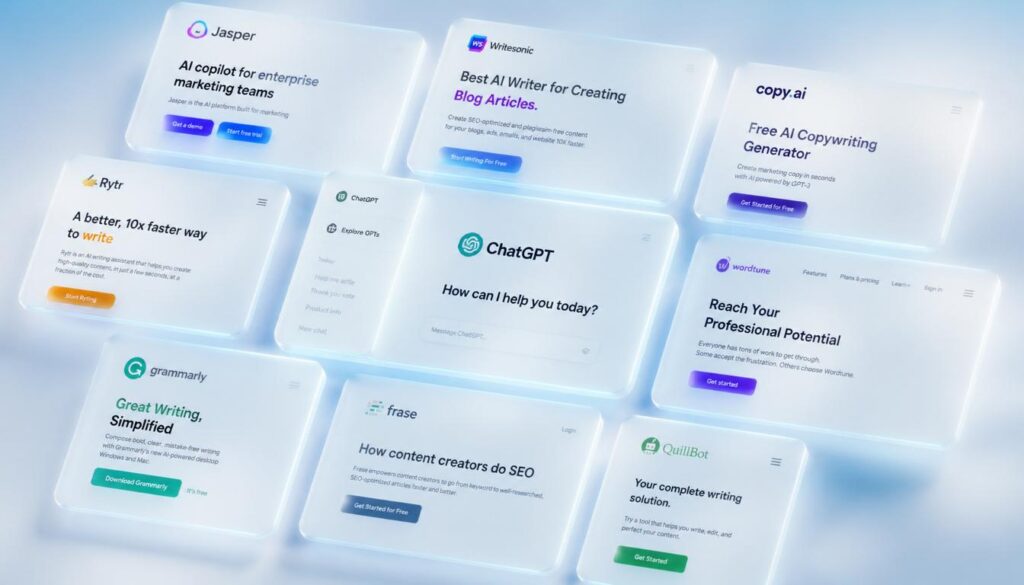
The best AI writing tools for Bloggers in 2026 are ChatGPT, Claude, Jasper, Writesonic, and Copy.ai. These tools help Bloggers write faster, improve SEO content quality, and beat writer’s block Many with a free plan Available. Bloggers who use AI writing tools report saving 3 to 5 hours per week on content creation Alone. Blogging used to mean spending six hours writing a single Article researching, outlining, drafting, editing, and praying it would rank. According to a 2024 HubSpot survey, 68% of bloggers say producing enough content consistently is their biggest challenge. That number has barely moved in five years. If you know the feeling of staring at a half-finished draft at midnight, wondering whether the post is even good enough to publish this guide is written for you. The struggle is not a lack of ideas. It is time, energy, and the grinding reality of doing it all alone. This post breaks down the best AI writing tools for bloggers available right now what each one does well, where it falls short, how much it costs, and exactly which type of blogger will get the most out of it. By the end, you will know which tool fits your workflow and how to use it to publish more without working more. What Are AI Writing Tools for Bloggers? AI writing tools are software platforms powered by large language Models (LLMs) that help you produce written content faster and with less effort. They use natural language processing to understand your prompts, follow instructions, and generate coherent text from a short paragraph to a full 3,000-word blog post. For bloggers specifically, these tools are not just Autocomplete on steroids. The best ones understand search intent, can structure content around a target keyword, suggest headings, write introductions, and even produce full drafts that require only light editing before publishing. There are several categories of AI writing tools in the Market today. Some are general-purpose Assistants like ChatGPT and Claude that handle any type of writing task. Others are purpose-built for content creators and Bloggers tools like Jasper and Writesonic come loaded with blog-specific templates and SEO integrations. Knowing which category fits your needs determines which tool you should use. Most platforms follow a freemium pricing model. You can start for free with limited usage and upgrade when you need more output or advanced features. For a solo blogger, free tiers are often enough to transform your weekly content output. Why Bloggers Need AI Writing Tools in 2025 The content game has changed significantly. Search engines Reward Depth, consistency, and Topical Authority. To rank for competitive keywords today, a single thin post is not Enough you need a cluster of well-structured, semantically complete articles covering your topic from every angle. That volume of content is Nearly impossible to produce manually on a one-person budget. AI content writing tools close that gap. A blogger who used to publish two posts per week can now publish four or five without burning out, because AI handles the first draft and the heavy structural lifting. According to Semrush’s 2024 State of Content Marketing report, Blogs that publish at least one article per week get 3.5 times more traffic than those that post monthly. AI makes that publishing frequency Achievable even for solo operators who do not have a writing team behind them. Beyond output volume, AI tools help with SEO content optimization. Many integrate directly with keyword Research data, suggest related terms, check reading level, and score your content against top-ranking competitors before you publish. That combination of speed and SEO intelligence is what makes these tools indispensable for serious bloggers right no Best AI Writing Tools for Bloggers in 2026: Full Breakdown Best AI Writing Tools for Bloggers: Side-by-Side Comparison Here is a quick comparison so you can find the right fit based on your budget, use case, and content volume needs: Tool Best For Free Plan Paid From SEO Integration Long-Form Quality ChatGPT All-around writing Yes $20/mo Manual prompting Excellent Claude Long-form, tone control Yes $20/mo Manual prompting Excellent Jasper Pro bloggers / agencies Trial only $49/mo Surfer SEO built-in Very Good Writesonic Free drafts + web data Yes $16/mo Basic keywords Good Copy.ai Multi-channel creators Yes (2K) $49/mo Template-based Good Koala AI SEO niche bloggers No $9/mo SERP-aware output Very Good How to Choose the Right AI Writing Tool for Your Blog With so many options, the easiest way to choose is to match the tool to your specific situation rather than looking for a universal best pick. If You Are Just Starting Out Start with the free tiers on ChatGPT and Claude. Use ChatGPT for brainstorming, outlines, and quick drafts. Use Claude when you need a full, coherent long-form article with consistent tone. Both are completely free to start, and together they cover 90% of a beginner blogger’s content needs. Do not buy any paid tool until you have published at least ten posts using the free versions. By that point, you will know exactly which limitations are actually costing you time and that tells you which upgrade is worth paying for. If You Are Focused on SEO and Organic Traffic Koala AI or Jasper with Surfer SEO integration is where you want to be. Both tools are designed around ranking they produce content that mirrors the structure, depth, and keyword distribution of top-ranking pages for your target query. The investment is real but so is the return. Bloggers who use AI-powered content generation tools paired with SEO data consistently report faster ranking timelines than those relying on manual writing or generic AI output. If You Run a Multi-Channel Content Operation Copy.ai gives you one platform for blog posts, social captions, email newsletters, and ad copy. If you are managing all of those channels solo, the template library saves significant time that you would otherwise spend switching between tools and re-prompting general-purpose AI assistants for different formats How to Use AI Writing Tools in Your Blogging Workflow: Step by Step A tool

FREE AI TOOL FOR CONTENT CREATION
AI Writing Tools, Ai Tools

10 Best Free AI Tools for Content Creators 2026

Free AI tools for content creation are software platforms that use artificial intelligence to help you write blog posts, generate social media captions, create ad copy, and automate publishing at zero cost. Top free options in 2026 include ChatGPT, Google Gemini, Copy.ai, Canva AI, and Writesonic’s free plan. Here is a number that should stop you mid-scroll: content creators who use AI tools produce content 3x faster than those who do not, According to a 2024 HubSpot report. Three times faster using tools that cost nothing. If you have been spending four hours writing one blog post, staring at a blank caption box for Instagram, or paying a freelancer for copy you could generate yourself, you already know the pain. Time runs out. Ideas dry up. The content calendar never stops demanding more. This guide breaks down the best free AI tools for content creation available right now what each one actually does, who it is best for, and how to start using them today. No fluff, no filler. Just what works. What Are Free AI Tools for Content Creation? Artificial intelligence has quietly Turned content creation into a skill Anyone can Execute at scale. These Tools use large language models (LLMs) and machine learning to Generate text, suggest ideas, Rewrite drafts, and even schedule posts all from a browser tab. The best part? A solid tier of these tools is completely free. Not free-trial free. Actually free, with usable limits that cover most solo creators and small businesses. Think of these platforms like a junior content team working inside your laptop. You bring the strategy and the brand voice. The AI brings speed, structure, and a never-Ending supply of first drafts.From my experience working with content Automation tools, the biggest mistake beginners make is expecting AI to replace thinking. It does not. It replaces the blank page which, for most creators, is the real enemy. The 10 Best Free AI Tools for Content Creation in 2026 1. ChatGPT (Free Plan by OpenAI) ChatGPT remains the most versatile free AI tool for content creation Available today. The free plan runs on GPT-4o mini and handles blog outlines, social captions, email drafts, product descriptions, and brainstorming sessions with surprising depth. What separates ChatGPT from other free tools is the quality of its conversational Memory within a session. You can refine, redirect, and iterate without starting over. That makes it ideal for long-form content workflows. Best for: Blog writers, newsletter creators, and anyone who needs a fast-Thinking writing partner. Free limit: Unlimited messages on GPT-4o mini; limited access to GPT-4o. 2. Google Gemini (Free via Google Account) Google Gemini is a free AI tool built directly into the Google Ecosystem. It connects with Google Docs, Gmail, and Google Search which makes it uniquely powerful for Research-heavy content creation. Unlike ChatGPT, Gemini can pull in live web data, making it stronger for fact-checking, Trend research, and content that needs up-to-Date information. If your content strategy depends on current events or fast-moving niches, Gemini Earns its place at the top. Best for: Content creators who live inside Google Workspace. Free limit: Free with any Google account; Gemini Advanced requires a subscription. 3. Copy.ai (Free Plan) Copy.ai is one of the Original AI copywriting tools, and its free plan still holds real value. You get access to over 90 templates from blog intros and Instagram captions to sales emails and YouTube scripts. The platform uses a workflow model, meaning you fill in context fields and the AI generates structured output based on your inputs. That makes it faster and more predictable than open-ended chat tools for specific copy tasks. Best for: Marketers, E-commerce store owners, and social media managers who need copy at volume. Free limit: 2,000 words per month on the free plan. 4. Canva AI (Magic Write — Free Plan) Canva is Already the go-to free tool for visual content. Magic Write, its AI text generator, pushes it into full content creation territory. You can generate captions, presentation copy, and short-form text directly inside your design canvas. The real Advantage is integration. You write and design in one place, which cuts the copy-paste cycle that slows most content workflows. For Instagram content creation tools, Canva AI is hard to beat when you want visuals and words together. Best for: Social media creators, designers, and small business owners. Free limit: 50 Magic Write uses included in the free Canva plan. 5. Writesonic (Free Plan) Writesonic offers one of the most capable free tiers Among AI content creation platforms. The free plan includes access to its Article Writer, AI Blog Builder, and Chatsonic a web-connected chatbot similar to Gemini. Chatsonic is especially useful for content with a news angle because it pulls real-time data. The article writer produces structured long-form drafts with SEO in mind, making it a legitimate free AI tool for bloggers who care about ranking. Best for: Bloggers and SEO-focused content creators. Free limit: 10,000 words per month on the free plan. 6. Notion AI (Limited Free Access) Notion AI turns your note-taking and project management tool into a content machine. It can summarize meeting notes into blog ideas, rewrite rough drafts, generate social posts from long articles, and create content calendars automatically. If you already use Notion to manage your content workflow, adding AI to the mix costs nothing extra on the free plan’s trial allocation. The content Automation built into Notion AI makes it one of the quietest productivity multipliers available. Best for: Content strategists and creators who manage editorial workflows. Free limit: 20 AI responses included before a paid upgrade is required. 7. Rytr (Free Plan) Rytr is a lightweight AI copywriting tool with a surprisingly capable free plan. It generates blog sections, email subject lines, product descriptions, and ad copy using over 40 use-case templates across 30 languages. The interface is clean and fast no learning curve. For beginners who want to try AI-powered content generation without commitment, Rytr is one of the easiest starting points available.

ways to make money quickly
Side Hustles

Top 47 Proven Ways to Make Money Quickly in 2026

47 Ways to Make Money Quickly include Freelancing on sites like Upwork or Fiverr, Selling unused items online, driving for a Rideshare or delivery App, Taking paid surveys, and pet sitting through Apps like Rover. Most of these pay out within a day or two, Cost little to nothing to start, and Work for almost anyone with a phone or laptop. A surprise car Repair bill or rent due in Three days has a way of turning your week upside down. Most people don’t need a new side hustle career to fix that. They need one good idea that pays fast. Most lists of ways to make money quickly are vague, US-only or border on Scams. None of that helps when you Need cash by Friday. This guide skips the Filler. Below are 47 real ways to Make Money Quickly, grouped by where you’ll do Them and tagged with how fast each one typically pays. Pick Two or Three that fit your schedule, your skills, and your location then start today. Quick Comparison: Fastest Ways to Get Paid Not every Method on This list pays at the same speed, and that matters when you’re in a hurry. Some Gigs hand you cash the same day. Others take a few days to clear. Here’s how the fastest options stack up before you dive into the full list. Method Time to First Payout Effort Level Typical Earnings Selling unused items Same day (in person) Low Varies by item Paid online surveys Same week Very low $1–$5 per survey Freelancing Days to weeks Medium $15–$100+/hour Rideshare/delivery driving Daily payouts available Medium $15–$25/hour Pet sitting/dog walking Per booking Low $15–$30/hour Mystery shopping 2–4 weeks Low $10–$25/job Use this Table to pick a starting point, then follow these three steps to actually Get moving: Ways to Make Money Quickly Online Your laptop or phone is the fastest path to extra cash for most people, since there’s no commute and no waiting on a hiring manager. These six methods need almost no setup time. Freelance your skills (Upwork, Fiverr) Freelancing turns whatever you’re Already good at writing, Design, Coding, Editing video into paid work for clients you’ve never met. Platforms like Upwork and Fiverr connect you with people who need that exact skill, often within days of creating a profile. The two platforms work differently. Upwork has you bid on posted jobs and set your own hourly or project rate, which suits people who want more control over pricing. Fiverr has you list pre-packaged “Gigs” starting around $5, which suits people who want buyers to come to them. Getting your first Gig usually follows the same pattern wherever you start: A common Mistake new Freelancers make is applying only to the highest-paying jobs straight out of the gate. Clients hiring for those roles almost always filter for reviews first, so a handful of smaller, lower-stakes projects early on tends to open more doors than chasing one big contract. Typical pay: $15–$100+ per hour, depending on skill | Time to payout: a few days to two weeks | Availability: global Take paid online surveys Survey sites pay you for sharing opinions on products and services, and the appeal is that you can do it from a couch with Zero experience. The pay per survey is small, but the entry barrier is close to zero. Sites like Swagbucks and Branded Surveys work on a points system you trade points for cash or gift cards once you hit a minimum threshold, usually $5 to $10. The trick most people miss is signing up for three or four sites at once, since survey availability varies day to day. Most people get Disqualified from a fair number of surveys partway through, since companies are screening for specific demographics. Don’t take it personally it happens to everyone, and the surveys you do qualify for usually pay slightly more to make up for it. This won’t replace a paycheck, but it’s a reliable way to make quick money in spare minutes between other tasks. Typical pay: $1–$5 per survey | Time to payout: a few days to a week | Availability: global, varies by site Sell unused items online Most homes have $200 to $500 worth of stuff just sitting in drawers and closets old Electronics, unworn clothes, books nobody’s opened in years. Selling them is one of the fastest ways to make money quickly Because the buyer is often ready to pay same-day. Marketplace Apps like eBay, Facebook Marketplace, and Vinted Each suit different items. Electronics tend to sell fastest on eBay, clothes do well on Vinted or Depop, and bulky furniture moves quicker on Facebook Marketplace through local pickup. Take clear photos in good light and price slightly below similar listings that single move speeds up a sale more than almost anything else. Typical pay: varies widely by item | Time to payout: same day to a few days | Availability: global Get paid to test websites and apps Companies pay everyday users to record Themselves navigating a website or app and narrating their experience out loud. It sounds unusual the first time, but it’s a legitimate research method that businesses rely on constantly. UserTesting is the best-known platform here, and a typical 15 to 20 minute test pays around $10. You don’t need any technical background companies specifically want to see how a regular person reacts, mistakes and all. The catch is that tests aren’t unlimited, so check the app regularly rather than expecting a steady stream. Typical pay: $4–$10 per 15-minute test | Time to payout: about a week | Availability: mainly US, UK, Canada, Australia Sell digital products or an eBook If you’ve already done the research on something Budgeting, a hobby, study tips turning that into a short eBook or template is a way to earn from work you’ve already done once. Self-publishing through Kindle Direct Publishing takes under an hour to set up. The real upside is that one eBook keeps earning after the initial

Scroll to Top