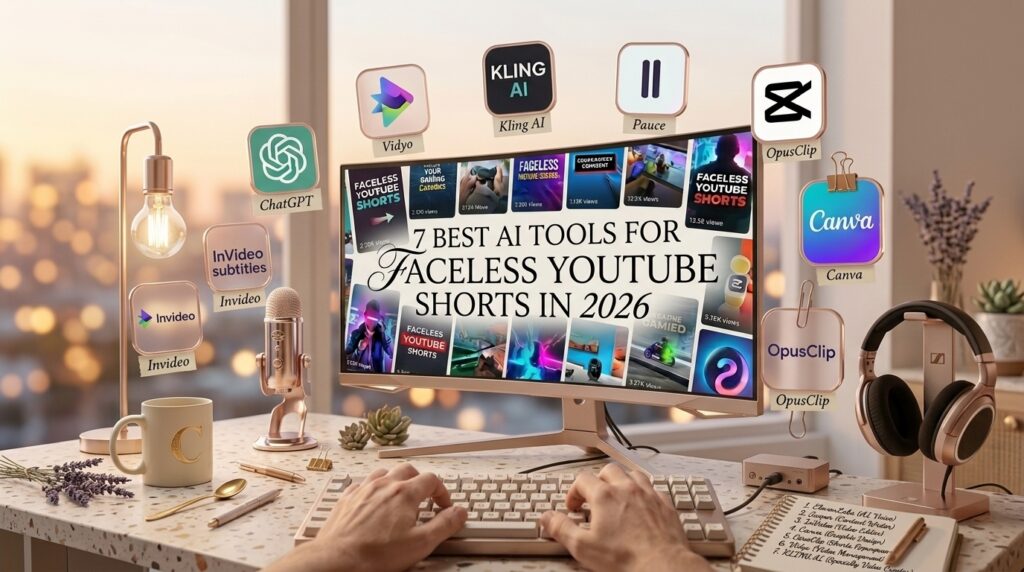
7 Best AI Tools for Faceless YouTube Shorts in 2026
Want to create YouTube Shorts but don’t want to appear on camera? You don’t need a camera, a studio, or an expensive editing setup to get started. AI tools can now help with almost every part of the production process finding ideas, writing scripts, generating visuals, creating voiceovers, adding captions, and turning long videos into Shorts. There’s one mistake beginners make again and again, though: trying to find a single AI tool that does everything. A better approach is to pick the right tool for each stage of production. In this guide, we’ll walk through seven useful AI tools for faceless YouTube Shorts, explain what each one is actually good at, who should use it, and how to combine them into a simple workflow. Quick answer: For a complete faceless Shorts workflow, use ChatGPT for ideas and scripts, InVideo AI for script-to-video production, Kling AI for custom visuals, ElevenLabs for voiceovers, CapCut for editing and captions, Canva for graphics, and OpusClip for turning existing long videos into Shorts. What Do You Need to Make a Faceless YouTube Short? A faceless Short can come together through several different workflows, but the basic process usually looks like this: Topic → Script → Visuals → Voiceover → Editing → Captions → Publishing You don’t need seven different subscriptions to get there. A beginner could start with just ChatGPT and CapCut, then add other tools only when a specific part of the workflow becomes a bottleneck. What matters most is understanding what each tool actually does. 1. ChatGPT — Best for Ideas, Research, and Shorts Scripts The first challenge isn’t editing it’s finding something worth making. ChatGPT can help you brainstorm topics, build outlines, develop hooks, rewrite scripts, and turn a rough idea into short-form narration. For example, instead of asking: “Write me a YouTube Short.“ give it more to work with: “Create a 45-second YouTube Short about three surprising facts about the ocean. Start with a curiosity-driven hook in the first sentence. Use short spoken sentences, build suspense between each fact, and finish with a memorable fact. Avoid generic introductions and filler.” The result should still be edited by a human before publishing. What ChatGPT is good for: Best for: Beginners who don’t know what to say. One important tip: Don’t publish the first AI-generated script exactly as it comes out. Add your own examples, verify the facts, fix awkward sentences, and make the narration sound like something a real person would actually say. Google has noted that generative AI can be useful for research and organization, but producing large amounts of content without adding real value can run afoul of its spam policies. 2. InVideo AI — Best for Turning a Script Into a Video If you don’t want to manually hunt down every clip for your Short, InVideo AI can simplify things by turning a text idea or script into a full video project — moving you from script to video without having to learn professional editing software first. A typical workflow: The key word here is review. AI-selected footage won’t always match your narration perfectly — a scene can technically relate to your sentence while still looking boring or sending the wrong message. Best for: Beginners who want a faster script-to-video workflow. Pros Cons Faster video creation Automated visuals may feel generic Great for beginners You still need to review the output Cuts down manual editing Better results usually need a follow-up edit Works well for faceless formats 3. Kling AI — Best for Custom AI-Generated Visuals Sometimes stock footage just isn’t enough. Say you’re making a Short about “What would Earth look like if humans disappeared?” You may need visuals that are hard to find in any stock library and that’s where an AI video generator like Kling AI comes in. Instead of searching for an existing clip, you can generate a visual concept directly from a prompt. For example: “An abandoned modern city slowly being reclaimed by nature, empty streets covered with vegetation, cinematic atmosphere, realistic lighting, slow camera movement, vertical 9:16 composition.” That generated clip can then become B-roll in your Short. Best for: Creators who want more original-looking visuals. Why this matters: A faceless channel doesn’t have to look like a slideshow of random stock footage. Custom visuals can help you build a recognizable visual style. But don’t overuse AI video. It should support your story, not replace it — a beautiful five-second clip won’t save a weak script. 4. ElevenLabs — Best for AI Voiceovers A faceless video still needs a voice, unless you’re deliberately building a text-only format. ElevenLabs turns written narration into spoken audio, and for a Short you’ll want to focus on: Your voiceover should fit the subject — a mystery Short probably calls for a more suspenseful delivery than a software tutorial would. Best for: Creators who don’t want to record their own voice. Voiceover tip: Don’t slow the narration down too much. Short-form viewers generally want information delivered clearly and efficiently, but rushing every sentence can make the video hard to follow. Write the script for speech, not like a blog post. 5. CapCut — Best for Editing and Captions You can generate the script, visuals, and voiceover with AI, but you still need to stitch those pieces into an engaging Short. That’s where an editor like CapCut comes in. A simple workflow: Import clips → add voiceover → cut scenes → add captions → add sound effects/music → review → export Captions matter a lot in short-form video, since plenty of viewers watch with the sound off. Use captions to emphasize important words. Instead of dumping a whole paragraph on screen, break the narration into short phrases. For example: “Scientists discovered something strange…” then: “The signal wasn’t coming from Earth.” That builds visual rhythm as the viewer reads. Best for: Beginners who want an easy mobile or desktop editing workflow. 6. Canva — Best for Graphics and Branding Not every part of a Short needs moving video. Sometimes