Droven IO AI Automation tools refer to an Educational platform that helps Businesses Research, compare, and plan AI workflow Automation before committing to a tool. It covers platforms like Zapier, Make, and n8n Explaining how AI Automation works, which use cases fit best, and how to pick the right tool for your business needs.
Most people searching this keyword expect to land on a dashboard. Instead, they find four nearly identical Articles saying the same vague things about “intelligent workflows” and “business Efficiency.” That Frustration is real and it happens because no one has bothered to explain what Droven.io Actually is and how it connects to the tools your business Needs right now. If you’ve been trying to figure out whether Droven IO is software you can use, a comparison site, or just a Content blog you’re asking exactly the right Question. The answer matters before you spend a single hour reading about it.
This guide covers everything clearly: what Droven.io actually is, which AI automation tools it covers, how those tools compare side by side, real use cases with measurable outcomes, and who should (and shouldn’t) bother with it. No filler. No repetition.
What Are Droven IO AI Automation Tools?
Before Anything else, let’s clear up the confusion that every competing Article avoids.
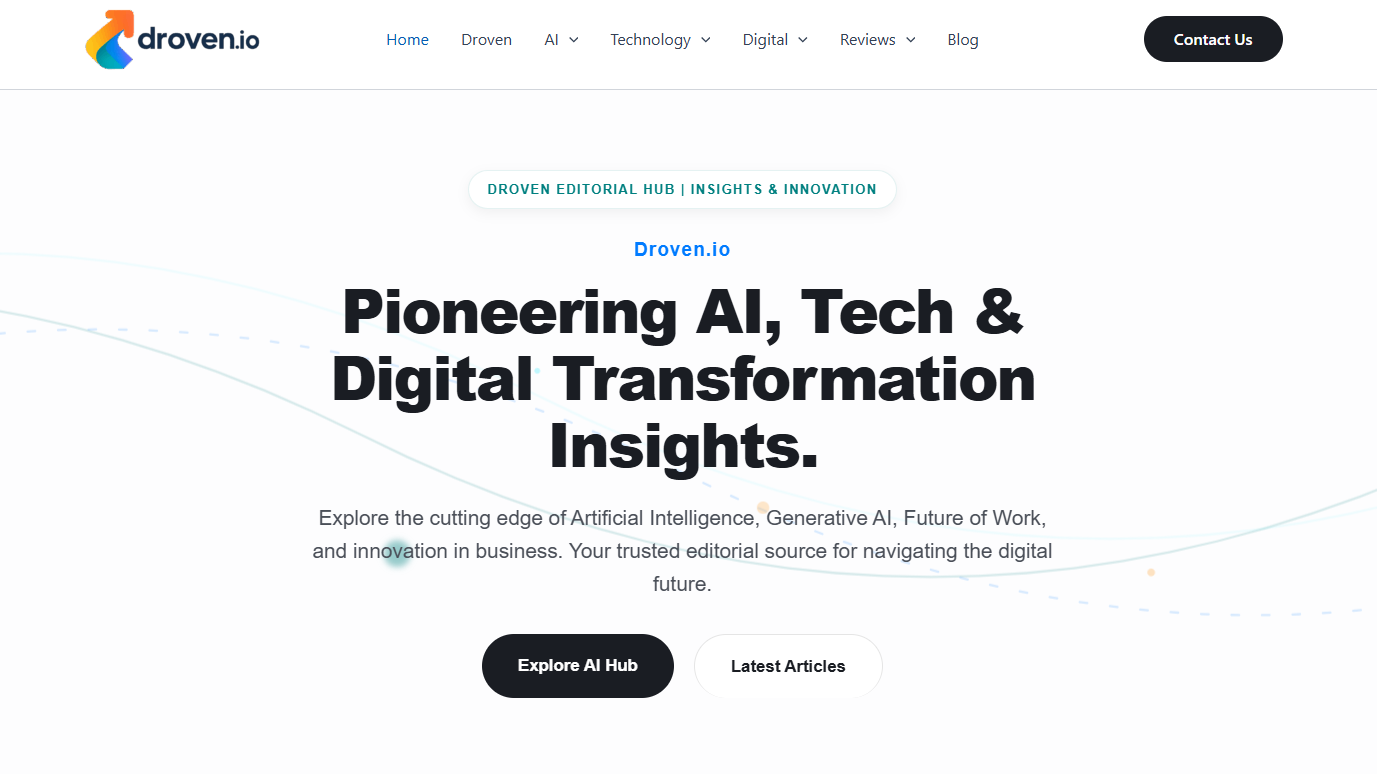
Droven.io is not a standalone Automation software platform. You cannot log in, build a workflow, and press run on Droven.io the way you would on Zapier or Make. It functions primarily as an informational and Educational resource a place where businesses learn about AI Automation tools, compare options, and plan their approach before buying or building anything.
Think of it like this: Droven.io is the Guide at the front of the store, not the product on the shelf. It explains what AI automation does, which tools handle which tasks, and how different platforms fit different business sizes. That distinction changes how you use it.
Quick Answer Callout
| Question | Answer |
|---|---|
| Is Droven.io real automation software? | No — it’s an informational/educational platform |
| Can you run workflows on Droven.io directly? | No — you use tools it covers (Zapier, Make, n8n, etc.) |
| Is it free to access? | Yes — all content is free |
| Who is it best for? | Teams researching AI automation before buying |
The value of Droven IO AI automation tools content is real but only if you understand what it is. Businesses that treat it as a planning resource rather than a software product get far more out of it.
Is Droven.io a Real Automation Platform or an Information Resource?
This is the question no competitor Answers honestly. Here’s the breakdown.
Droven.io sits in the same category as sites like G2, Capterra, or HubSpot’s blog it explains, reviews, and compares AI automation tools rather than building or hosting them. The platform produces guides on workflow Automation, no-code Tools, AI decision-Making systems, and Digital Transformation. Businesses use this content to understand the landscape before they commit budget.
That doesn’t make it useless Quite the opposite. Most companies fail at Automation not because they can’t find tools, but because they don’t understand which category of tool fits their Actual problem. A chatbot, a workflow builder, a Document extraction tool, and a no-code automation platform can all claim AI capabilities, but they solve completely different problems.
Droven.io helps teams slow down enough to ask the right question: not “which AI tool is best?” but “which type of tool matches the process I’m trying to fix?” From a practical standpoint, here’s how to use it correctly. Use Droven.io when you’re in the research and planning phase mapping your current workflow, identifying bottlenecks, comparing tool categories, and preparing questions for vendor calls. Then move to Zapier, Make, or n8n when you’re ready to actually build.
How Droven IO AI Automation Tools Improve Business Productivity

The productivity case for AI Automation is strong but it’s specific, not universal. According to McKinsey’s 2024 Automation research, businesses that automate repetitive workflows report an average of 10–15 hours saved per Employee per week on Administrative tasks. That number only materializes when companies automate the right tasks.
Droven IO AI automation tools content focuses on five core productivity gains that apply across industries.
1. Time saved on repetitive tasks. Tasks like sending follow-up Emails, updating CRM records, scheduling posts, and generating weekly reports don’t require human judgment they require consistency. Automation handles these without fatigue, error, or delay. A marketing team that Automates campaign scheduling, for example, can reallocate those hours to strategy and creative work.
2. Fewer human errors in data handling. Manual data entry is one of the top sources of business errors. When a customer submits a form and a human copies that data into a CRM, a spreadsheet, and an email thread, mistakes happen. Automated workflows eliminate that chain entirely the data moves once, correctly, every time.
3. Scalability without proportional hiring costs. A business handling 100 customer inquiries a day can’t simply 10x to 1,000 by hiring 10x more staff. AI Automation tools allow that same team to manage higher volume by routing, categorizing, and responding to routine requests automatically. The human team handles only what actually requires human input.
4. Workflow integration across disconnected tools. Most businesses use 10 to 15 different software applications. When those don’t talk to each other, employees manually bridge the gaps. AI automation tools connect these systems so when a deal closes in a CRM, the finance tool generates an invoice, the project management tool creates a new project, and the client gets a welcome email. All automatically.
5. Smarter decisions with real-time analytics. Automation platforms don’t just move data they analyze it. Businesses get dashboards showing where workflows slow down, which customer segments respond best, and where errors concentrate. That visibility leads to faster, more accurate decisions.
Key Features of AI Automation Platforms Covered by Droven.io
Smart Workflow Automation
Workflow Automation is the backbone of every AI Automation platform. At its core, it works like this: a trigger happens (a form gets submitted, an Email arrives, a payment processes), and a set of pre-defined actions fires automatically in response. The “smart” part comes from AI layering on top instead of following fixed rules every time, the system learns from patterns and adjusts.
A simple example: a Shopify store owner sets up a workflow where every Abandoned cart triggers a personalized follow-up email. A smarter version uses AI to analyze that customer’s browsing history and send a different message depending on what they looked at without anyone writing individual emails.
Platforms like Make and n8n excel at this kind of multi-step, adaptive workflow. Droven.io content explains when to use each one.
AI-Powered Decision Making
Traditional Automation follows instructions. AI-powered Automation makes judgment calls.
Machine learning Algorithms analyze historical data to identify patterns and predict outcomes. A customer support system using AI doesn’t just route tickets it reads the message, estimates urgency, and assigns it to the right team member based on past resolution patterns. A sales tool using predictive analytics doesn’t just track leads it scores them based on likelihood to convert.
This shift from rule-based to intelligence-based automation is what separates 2025 platforms from older tools. Droven.io’s content helps businesses understand which platforms have genuine AI decision-making versus which are using the word loosely.
No-Code and Low-Code Tools Explained
One of the most practical topics Droven IO AI Automation tools content covers is the no-code versus low-code distinction because choosing wrong here wastes months.
No-code tools like Zapier are designed for non-technical users. If your workflow is “when someone fills out this form, add them to this email list and notify me in Slack,” Zapier handles that in about ten minutes with no coding required. For simple app-to-app connections with clear triggers, no-code is the right choice.
Low-code tools like Make give more control. When a workflow needs branching logic (“if this condition is true, do this; if not, do that”), data transformation, or custom error handling, low-code lets you build that without being a full developer. n8n goes further it’s open-source and self-hosted, ideal for technical teams who need maximum flexibility and data control.
Knowing which category fits your problem saves you from buying a $500/month enterprise tool when a free Zapier account would do the job.
Real-Time Analytics and Monitoring
Automation without visibility is a liability. If a workflow breaks silently a form stops capturing leads, an invoice stops generating, a support ticket stops routing and no one knows for hours or days, the damage is real.
Quality automation platforms provide real-time dashboards that show workflow performance, error rates, task completion counts, and bottlenecks. Make, for example, has a built-in execution history showing exactly which step in a scenario failed and why. UiPath’s enterprise platform offers detailed audit logs for compliance-heavy industries. Droven.io covers what to look for in a monitoring setup and which platforms offer the most useful visibility out of the box.
Which AI Automation Tools Does Droven.io Actually Recommend?
This is what most people searching for drovenio ai tools 2025 Actually want a straight answer on which tools to use. Here’s a breakdown of the main platforms covered.
Zapier Best for: Non-Technical teams, simple app connections, fast setup.
Pricing: Free plan available;
paid plans from $19.99/month.
AI features: AI-powered Zap suggestions, natural language workflow creation (beta). Ease of use: Easiest of all options designed for non-developers. Best scenario: A small marketing team that wants to connect their form tool to their CRM and email platform without any coding.
Make (formerly Integromat) Best for: Visual thinkers, multi-step workflows, more branching logic.
Pricing: Free plan available;
paid plans from $9/month
AI features: AI modules for content generation and data processing. Ease of use: Moderate visual drag-and-drop interface but more complexity than Zapier. Best scenario: An agency building client workflows that involve multiple conditional paths and data transformation between steps
n8n Best for: Developers, technical teams, privacy-sensitive organizations.
Pricing: Free (self-hosted);
cloud version from $20/month.
AI features: Fully flexible — integrate any AI API or LLM directly. Ease of use: Technical requires comfort with APIs and some coding. Best scenario: A SaaS company that needs full data control and wants to build custom AI-powered automations without vendor lock-in.
UiPath Best for: Enterprise organizations, compliance-heavy industries.
Pricing: Enterprise pricing starts around $420/month.
AI features: Document AI, process mining, intelligent automation suite. Ease of use: Complex designed for IT teams and automation specialists. Best scenario: A healthcare or finance company needing to automate document-heavy processes with full audit trails.
Lindy.ai Best for: Executives and founders who want AI “agents” for specific tasks.
Pricing: Paid plans from $49/month.
AI features: Purpose-built AI agents for scheduling, email management, task coordination. Ease of use: High conversational setup. Best scenario: A founder who wants to automate inbox management, meeting scheduling, and follow-up tasks without building workflows manually.
Automation Anywhere Best for: Large-scale enterprise RPA deployments.
Pricing: Enterprise contact for pricing. AI features: Intelligent document processing, AI-driven bot orchestration. Best scenario: A global manufacturing or logistics company needing to automate thousands of process instances across departments.
Droven IO vs Zapier vs Make vs n8n: Side-by-Side Comparison
Here’s the comparison table that no competitor has built a clear, honest breakdown across the platforms most relevant to small and mid-sized businesses.
| Feature | Droven.io | Zapier | Make | n8n |
|---|---|---|---|---|
| Type | Educational resource | Automation platform | Automation platform | Open-source platform |
| Free Plan | ✅ All content free | ✅ Limited (100 tasks/mo) | ✅ Limited (1,000 ops/mo) | ✅ Free (self-hosted) |
| Paid Pricing | Free | From $19.99/mo | From $9/mo | From $20/mo (cloud) |
| Best For | Research & planning | Simple app connections | Visual multi-step workflows | Developers & technical teams |
| No-Code Friendly | N/A | ✅ Yes | ✅ Mostly | ❌ Requires technical knowledge |
| AI Features | Content guides | AI Zap builder (beta) | AI modules | Flexible — any AI API |
| Data Privacy Control | N/A | Cloud-dependent | Cloud-dependent | ✅ Full (self-hosted) |
| Integrations | N/A | 6,000+ apps | 1,800+ apps | 400+ nodes (expandable) |
| Learning Curve | Low (reading) | Low | Medium | High |
The most important thing this table shows: Droven.io and these automation platforms don’t compete they serve different stages of the same journey. You research on Droven.io and build on Zapier, Make, or n8n.
Real-World Examples: How Businesses Use Droven IO AI Automation Tools
E-Commerce: Automating Order Follow-Ups
A mid-sized Shopify store selling fitness equipment was spending 3 hours per day on post-purchase customer emails shipping confirmations, review requests, and re-engagement messages. All of it was manual.
After using Droven.io’s content to identify the right tool category (workflow automation with e-commerce integrations), they set up a Make scenario that Automatically sent a personalized shipping update when an order status changed, a review request 7 days after delivery, and a discount offer 30 days later for non-repeat buyers. Total setup time: one afternoon. Result: customer email response rates increased by 34%, and the team reclaimed 15 hours per week.
The tool choice mattered. Zapier would have handled the basics, but the conditional logic (“only send the discount if the customer hasn’t purchased again”) required Make’s branching capability.
Marketing Agency: Streamlining Content Workflows
A 12-person Digital marketing Agency was managing content calendars for 20 clients across Google Sheets, Slack, and three different scheduling tools. Deadlines were missed because handoff points were manual a writer would finish a draft, and someone had to remember to notify the editor, update the sheet, and schedule the social post.
Using Droven.io’s content to map the workflow first, the agency identified four specific bottlenecks. They then built a Make workflow that automatically moved content through stages, notified the next team member, scheduled approved posts, and updated the client’s reporting dashboard. Monthly reporting time dropped from 8 hours per client to 45 minutes.
Freelancer: Replacing Manual Admin With No-Code Tools
A solo freelance consultant was losing 6–8 hours per week to admin: sending invoices, following up on unpaid bills, scheduling discovery calls, and logging client notes. None of it required skill it just required time she didn’t have.
After reading Droven.io’s no-code automation guides, she connected Calendly, Stripe, and Gmail through Zapier. New bookings automatically triggered an invoice, confirmed the meeting details, and added the client to her project tracking sheet. Invoice follow-ups sent automatically after 7 and 14 days. That 6–8 hours came back completely.
Her takeaway: “I didn’t need enterprise software. I needed to stop doing the same four tasks by hand every week.”
Step-by-Step: How to Start Using AI Automation Tools (Droven.io Method)
This is the process Droven.io’s planning content recommends and it’s the clearest path to actually implementing automation that works.
Step 1: Name one specific problem. Don’t start with “we need to automate.” Start with one annoying, repeated, easy-to-observe process. Good candidates: missed follow-ups, manual data copying between apps, repetitive internal questions, slow document review. Vague goals lead to demos, not decisions.
Step 2: Define the workflow in plain language. Write out: the trigger (what starts the process), the action (what needs to happen), the check (does a human need to approve anything?), and the result (where does the output go?). If you can’t describe your process clearly without AI, automation will make the confusion faster — not better.
Step 3: Identify the right tool category. Content drafting problem → AI writing tools. Moving data between apps → workflow automation platforms (Zapier, Make). Handling approvals with routing → workflow tools with review steps. Processing documents → document AI or extraction tools. Match the category to the problem before comparing brands.
Step 4: Shortlist two or three platforms. Use Droven.io content to narrow to two or three realistic options. Keep tools that connect to your existing apps and match your process. Reject tools that require changing your entire workflow before proving any value. Pause tools that need data access you can’t safely grant yet.
Step 5: Run a small pilot first. Test on one narrow workflow before rolling anything out. Use real enough data to expose problems. Judge success by practical results fewer manual steps, fewer missed handoffs, faster review not by how impressive the demo looked.
Benefits of Using Droven IO AI Automation Tools
The business case for AI automation is well-documented. A 2024 Gartner report found that organizations using intelligent automation in core operations reduced process errors by up to 40% and improved throughput by 20–30% within the first year of deployment.
Here are the five most consistent benefits businesses report after implementing the tools Droven.io covers.
- 5–15 hours saved per employee per week on repetitive administrative tasks — tasks that don’t require judgment, just consistency.
- Reduction in human error across data entry, scheduling, and communication — one automated workflow eliminates an entire chain of manual hand-offs.
- Scalability without proportional costs — a team of 5 can handle the operational volume of a team of 15 when the right workflows are automated.
- Faster customer response times — AI chatbots and automated ticket routing cut average first-response time from hours to minutes.
- 24/7 operational coverage — automated workflows don’t stop at 5pm, don’t call in sick, and don’t need overtime pay.
Challenges and Risks to Know Before You Automate
Automation isn’t a silver bullet. Every business that’s rushed into it without planning has a cautionary story.
Data privacy and security. The most overlooked risk. When you connect your CRM, email, payment processor, and project tool through an automation platform, that platform can access significant amounts of sensitive data. Before connecting any tool, check what data it can read, store, and transmit. Verify that it meets your industry’s compliance requirements especially in healthcare, finance, and legal services.
Over-automation without human review. Not every process should be fully automated. Anything customer-facing, financially significant, or legally sensitive needs a human checkpoint. An automated email that contains an error and reaches 10,000 customers before anyone notices is far worse than one sent manually.
Integration complexity with legacy systems. Older business software especially custom-built internal tools often doesn’t have the APIs that modern automation platforms need. This is a common reason automation projects stall.
Staff training and adoption. Automation only works if the team uses it. Rolling out a new workflow without training, documentation, and buy-in creates shadow processes where employees work around the automation rather than through it.
Who Should (and Shouldn’t) Use Droven IO AI Automation Tools
Good fit for:
- Small business owners exploring automation for the first time who need a clear starting point before choosing tools
- Marketing teams looking to streamline campaign workflows, content scheduling, and lead tracking
- Operations managers comparing automation platforms before presenting a purchase recommendation
- Freelancers and solopreneurs who want to replace manual admin with simple no-code workflows
- Startups building their first tech stack who want to understand AI automation before overcomplicating it
Not the right fit if:
- You need to actually build and run automation workflows right now go directly to Zapier, Make, or n8n
- Your organization has already selected a platform and is in implementation mode Droven.io content won’t help at that stage
- You’re dealing with regulated data that requires formal vendor security reviews before any tool is connected
FAQ
Q: What exactly is Droven.io is it real automation software? A: Droven.io is primarily an educational content platform focused on AI automation, not a standalone automation tool you can log into and run workflows on. It helps businesses understand how AI automation works, which tools fit which use cases, and how to plan an automation strategy before buying. The actual automation runs on platforms like Zapier, Make, n8n, or UiPath — not on Droven.io itself.
Q: Are droven io ai automation tools free to use? A: The educational content on Droven.io is free to access — there’s no paywall or login required. The automation tools it covers operate on their own pricing models. Zapier offers a free plan capped at 100 tasks per month, Make’s free plan covers 1,000 operations monthly, and n8n is free when self-hosted. Paid tiers on these platforms range from $9/month to enterprise pricing depending on usage volume and features needed.
Q: How does Droven.io compare to Zapier or Make? A: They’re not in direct competition — they serve different purposes in the automation journey. Droven.io helps you research, plan, and compare tools. Zapier and Make are where you actually build and run automation workflows. The best approach is to use Droven.io content during the planning phase, then move to Zapier or Make when you’re ready to implement. Trying to treat Droven.io as a functional automation platform will lead to frustration.
Q: What types of businesses benefit most from droven io ai automation tools? A: Small-to-mid-sized businesses in e-commerce, marketing, customer support, and operations see the most consistent benefits. Specifically: businesses with repetitive admin-heavy workflows, teams managing multiple disconnected software tools, agencies handling client workflows at scale, and solopreneurs looking to replace manual tasks with no-code solutions. Enterprise organizations with complex compliance requirements typically move directly to platforms like UiPath or Automation Anywhere.
Q: Is Droven.io safe — what about data privacy? A: As an informational site, Droven.io itself doesn’t process your business data. The data privacy question applies to the specific automation tools you choose to connect and use. Before integrating any platform, review what data it accesses, how it stores and transmits that data, and whether it complies with regulations relevant to your industry (GDPR, HIPAA, SOC 2, etc.). Most major platforms like Zapier and Make publish their security documentation publicly.
Q: Which is better for beginners — Zapier or Make? A: For most beginners, Zapier is the easier starting point. The interface is simpler, the setup process walks you through step by step, and most common app connections are pre-built as templates. Make has more power — better for complex workflows with branching logic — but the learning curve is steeper. A practical approach: start with Zapier to learn automation fundamentals, then migrate to Make when your workflows outgrow what Zapier’s structure allows.
Q: Does Droven.io cover the latest AI automation trends for 2025? A: Drovenio ai tools 2025 content covers current trends including AI agent workflows, large language model integrations in automation platforms, AI-powered document processing, and no-code AI tool adoption. The platform updates content to reflect shifts in the automation landscape, making it a useful reference for staying current on which tools are gaining adoption and which categories are evolving fastest.
Conclusion
Three things matter most from this guide. First, Droven.io is an educational resource, not software understanding that distinction saves you from searching for a login that doesn’t exist. Second, the AI automation tools it covers Zapier, Make, n8n, UiPath, and others each solve specific problems, and choosing the wrong category wastes more time than doing it manually. Third, the businesses that succeed with AI automation start with one specific problem, not a vague goal.
The gap between “we want to automate” and “we actually automated this one thing successfully” is smaller than most teams think. It doesn’t require enterprise software, a dedicated IT team, or a large budget. It requires picking the right tool for one well-defined workflow and running a real pilot.
Pick one process this week that your team does manually, repeatedly, and without needing much judgment. Use Droven.io content to identify the right tool category. Then test it on Zapier’s free plan before spending a dollar. That’s how automation actually starts not with a platform decision, but with a problem worth solving.